Overview
An international conference covering a broad range of recent developments in symplectic geometry, open to all interested participants.
Confirmed Speakers
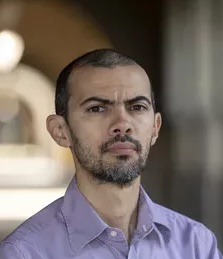
Stanford University
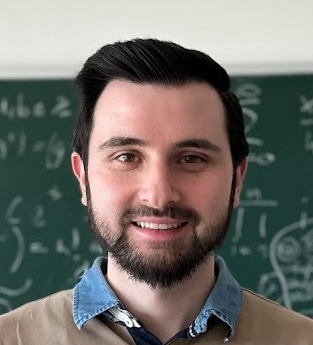
Heidelberg University
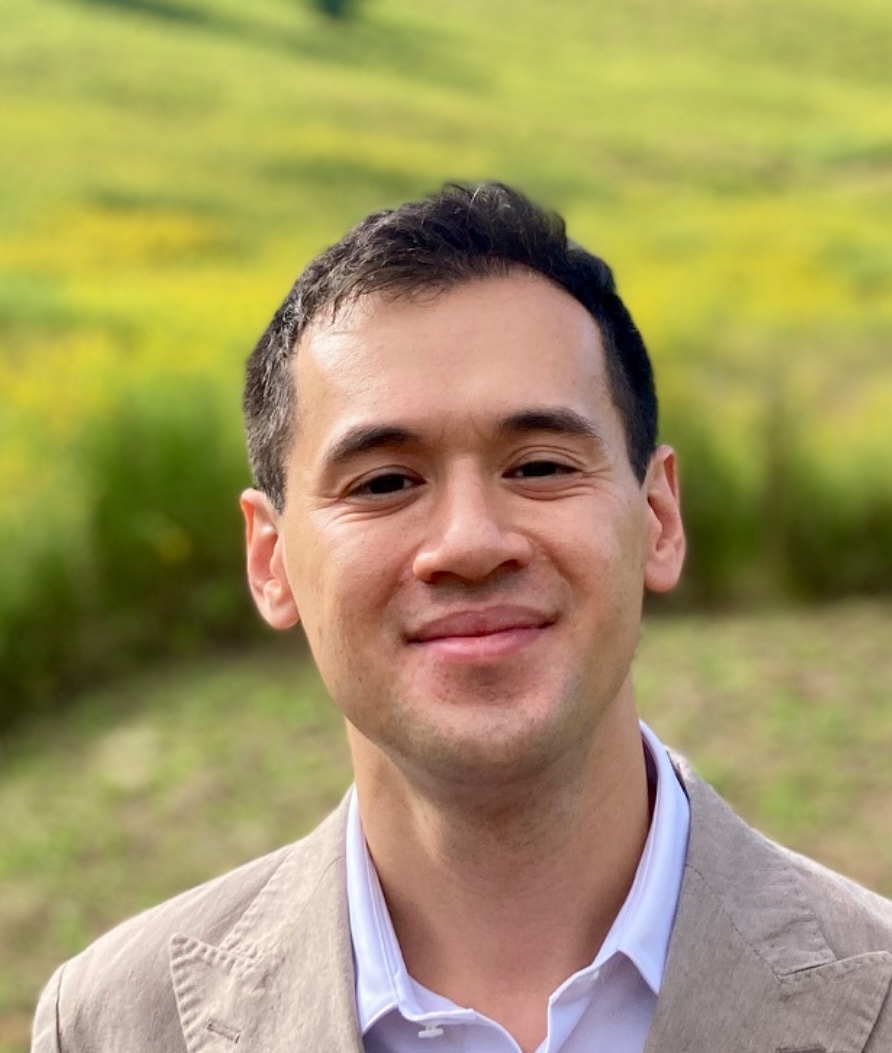
University College London
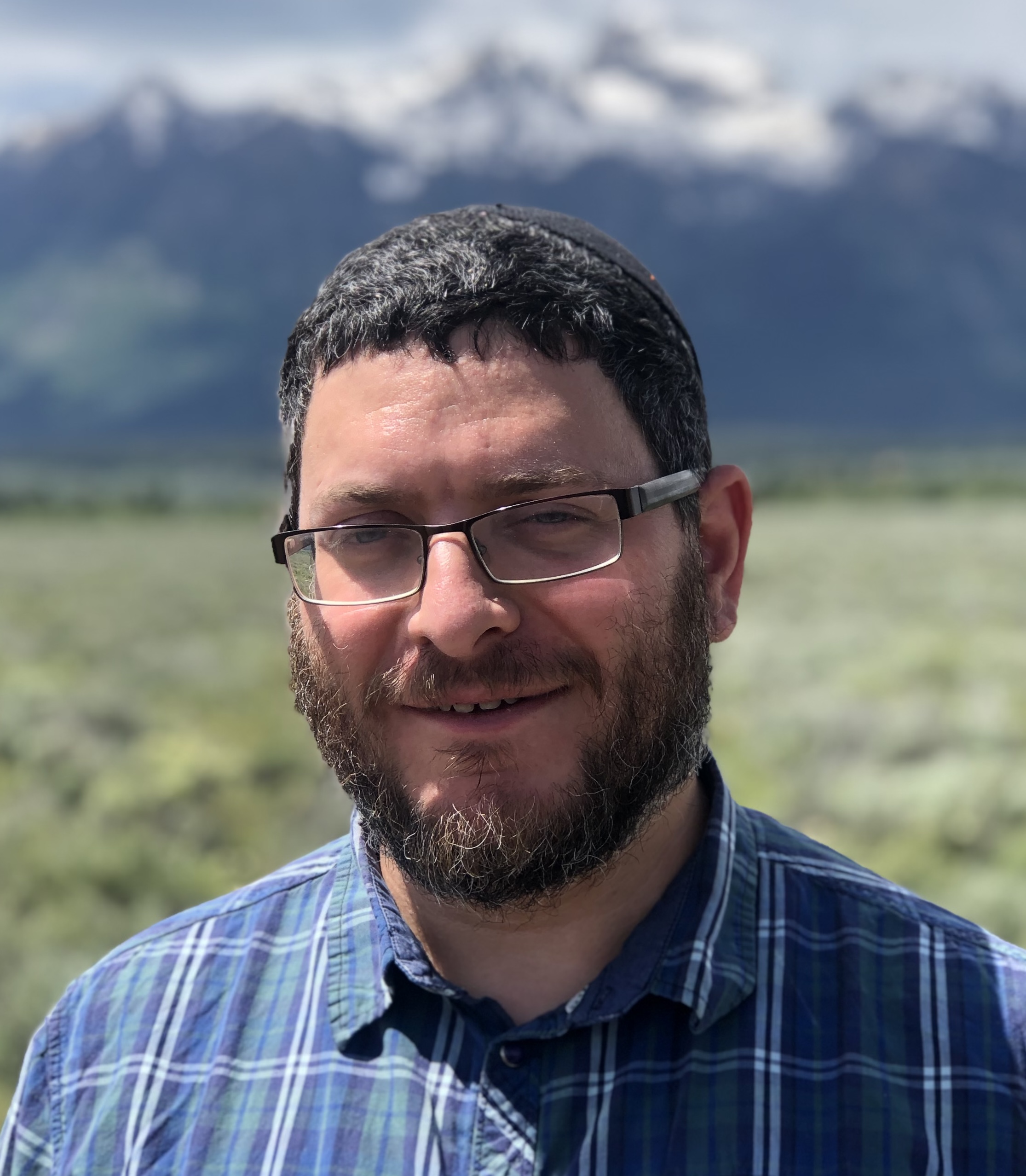
Hebrew University of Jerusalem
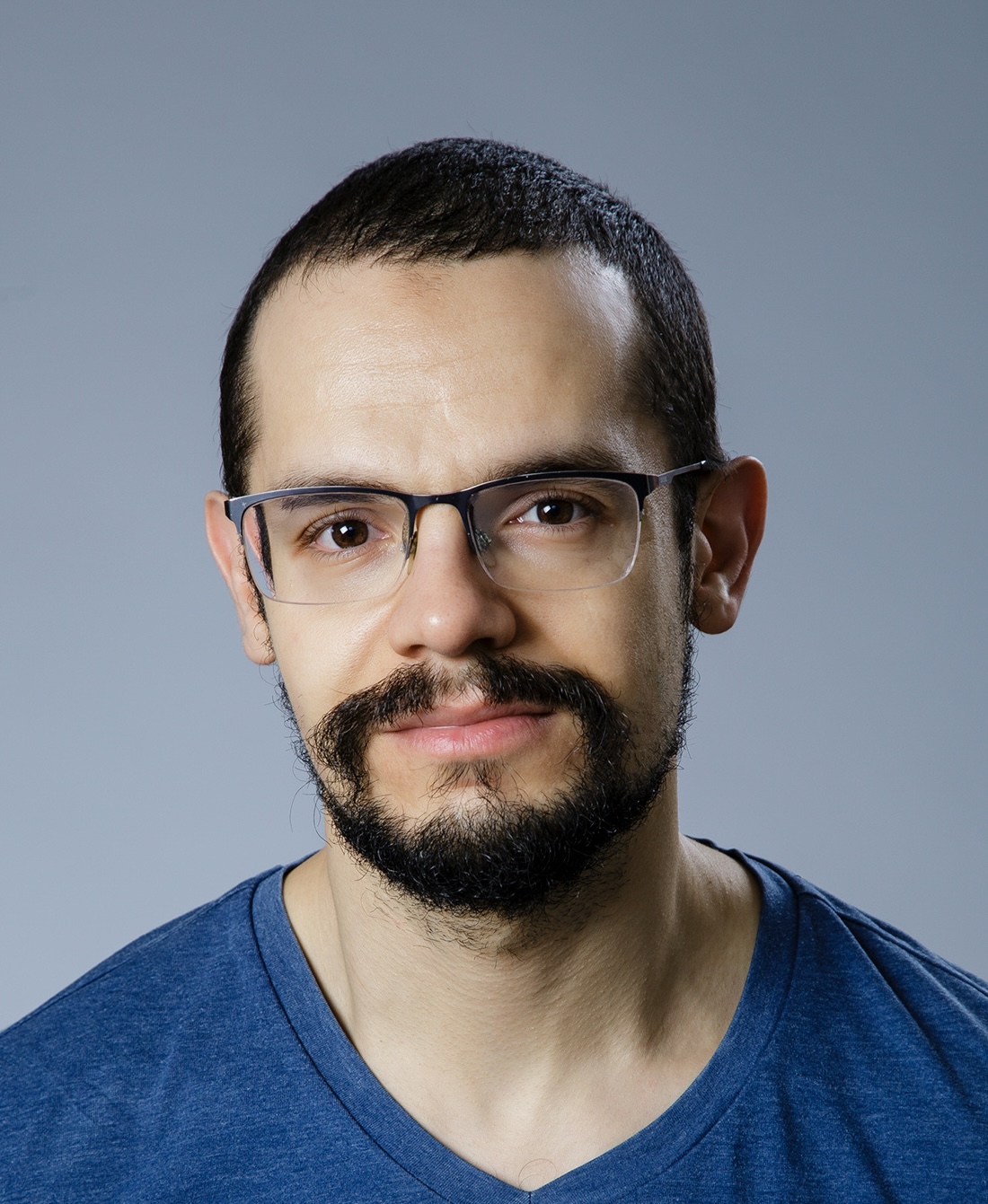
National University of Singapore
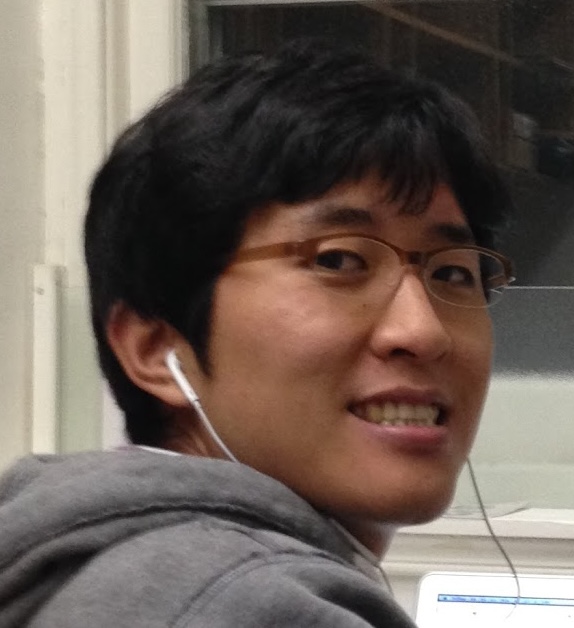
Pusan National University
University of Geneva
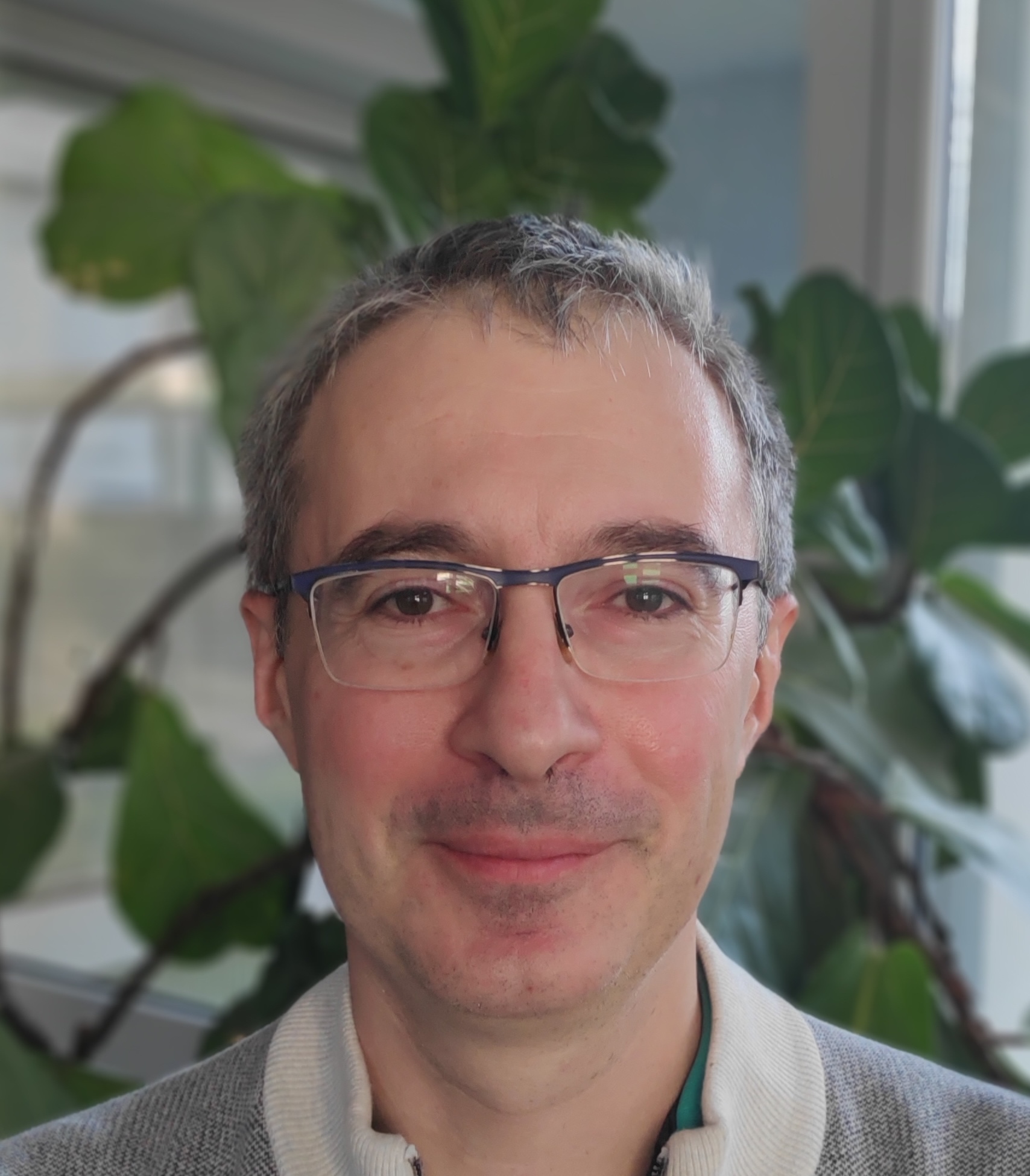
University of Strasbourg
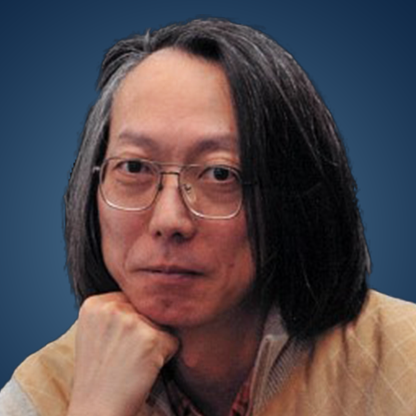
Kyoto University
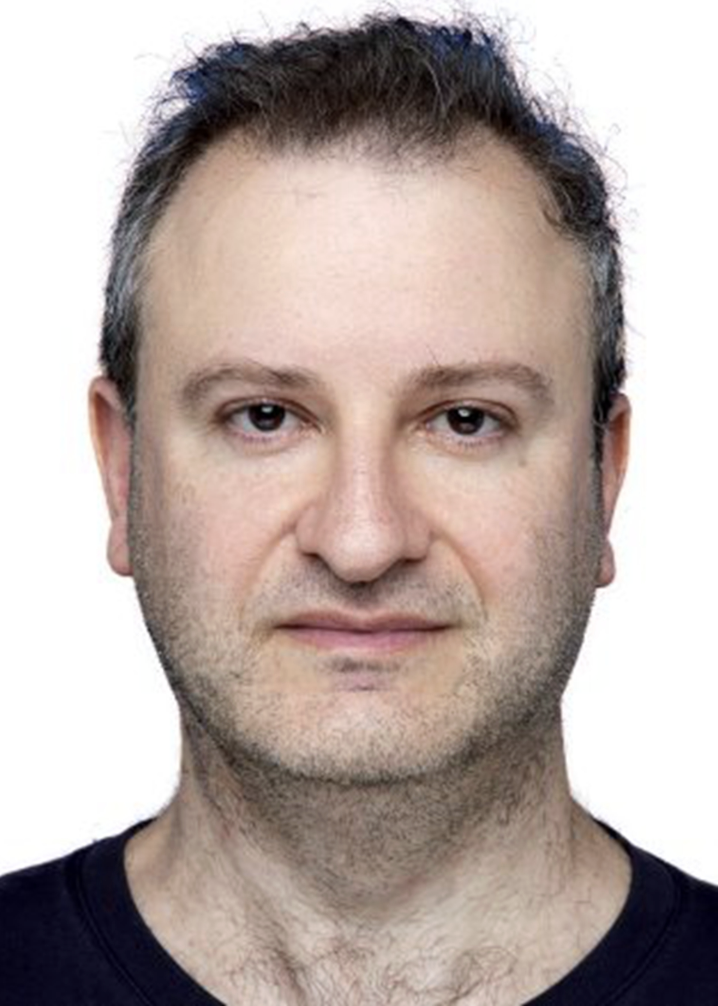
Southern University of Science and Technology
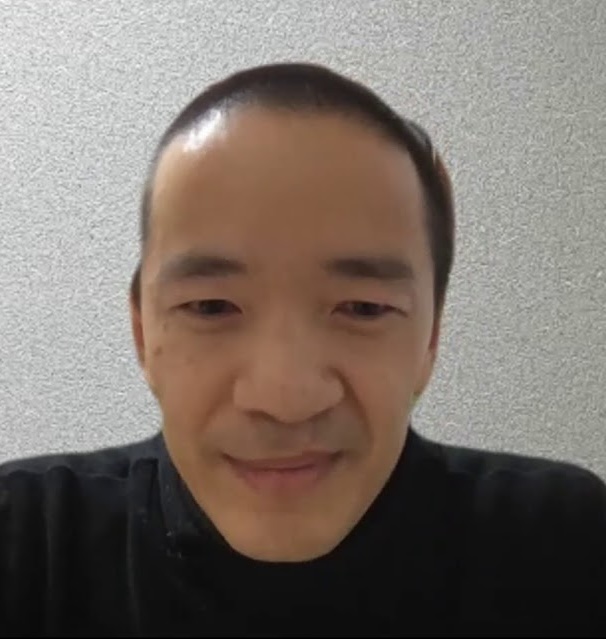
University of Tokyo
University of Science and Technology of China
Program
Sessions will run Tuesday–Friday (Nov 25–28).
Note: This schedule is tentative and is likely to change closer to the conference date.
| Tuesday, Nov 25 |
09:00–09:30 Registration
09:30–10:30 Talk 1: Kaoru Ono – A symplectic fixed point theorem in the presence of infinite fundamental group AbstractAbstract will appear here.
10:30–11:00 Coffee Break
11:00–12:00 Talk 2: Grigory Mikhalkin – Totally real rational functions of degrees g and g-1 on real curves of genus g AbstractA real function is totally real if the inverse image of any real value consists entirely of real points. Such a function gives an (unramified) covering of the real locus over the circle. Kummer and Shaw have introduced the "separating semigroup" of a real curve consisting of all possible multidegrees appearing in this way. We overview what is known on this semigroup, paying a special attention to the elements of degree equal to the genus of the curve and those less by one. Based on a joint work in progress with Stepan Orevkov.
12:00–14:00 Lunch
14:00–15:00 Talk 3: Yoel Groman – Closed strings and the reconstruction problem in mirror symmetry AbstractConsider a symplectic Calabi-Yau manifold which is either closed or geometrically bounded and which is equipped with a Maslov 0 Lagrangian torus fibration with singularities of simple Gross-Siebert type. The existence of such fibrations on anti-canonical hypersuraces in toric varieties has recently been announced by Matessi et al. In this setting I will discuss work in progress on a solution to the reconstruction problem in mirror symmetry which is based on symplectic cohomology with supports on invariant subsets of the fibration. A feature of this construction is that it leads to an explanation of closed string mirror symmetry.
15:00–15:30 Coffee Break
15:30–16:30 Talk 4: Yoosik Kim – Cluster algebras and monotone Lagrangian tori AbstractIn this talk, I will discuss one application of cluster algebras to symplectic geometry. Using the cluster algebra structure on unipotent cell and the existence of nice basis of the homogeneous coordinate ring of partial flag varieties, we construct monotone Lagrangian tori in partial flag varieties. We also present a convenient criterion, derived from properties of the dual canonical basis, for proving the existence of infinitely many distinct monotone Lagrangian tori. As an application, we show that whenever the corresponding cluster algebra is of infinite type, the associated family of monotone Lagrangian tori contains infinitely many distinct objects. This talk is based on joint work with Yunhyung Cho, Myungho Kim, and Euiyong Park. |
| Wednesday, Nov 26 |
09:30–10:30 Talk 5: Kazushi Ueda – Solid quasicoherent sheaves and homological mirror symmetry
AbstractHomological mirror symmetry is originally formulated by Kontsevich as a conjectural equivalence between the derived Fukaya category of a Calabi-Yau manifold and the derived category of coherent sheaves on its mirror. If the symplectic form is irrational, then there are no compact Lagrangian submanifolds, and if the complex structure is general, there are only few coherent sheaves, so that these categories contain little information. In the talk, we will discuss speculations on a generalization of the Fukaya category consisting of noncompact Lagrangian submanifolds with solid local systems, which should be mirror to solid quasicoherent sheaves.
10:30–11:00 Coffee Break
11:00–12:00 Talk 6: Jun Zhang – Hamiltonian shape invariant and its quantitative applications AbstractIn this talk, we introduce a non-linear symplectic capacity for 4-dimensional Euclidean domains $X$, known as the shape invariant of $X$, which describes the embeddability of product Lagrangian tori into $X$. We will present a computational framework for this invariant using techniques from symplectic field theory. Furthermore, we explore its applications in uncovering new obstructions to symplectic embeddings and detecting Hamiltonian knottedness of Lagrangian tori. This talk is based on joint work with Richard Hind. |
| Thursday, Nov 27 |
09:30–10:30 Talk 7: Alex Oancea – Dynamics in cotangent bundles via symplectic homology with differential graded coefficients
AbstractI will start by presenting the recent construction of symplectic homology with differential graded coefficients, as developed in joint work with Barraud, Damian and Humilière. I will then present applications to dynamics in cotangent bundles of closed manifolds that are not aspherical.
10:30–11:00 Coffee Break
11:00–12:00 Talk 8: Mohammed Abouzaid – Revisiting Contact Homology AbstractI will discuss joint work in progress with Zhengyi Zhou towards understanding how to lift contact homology to a bordism-valued invariant.
12:00–14:00 Lunch
14:00–15:00 Talk 9: Yusuf Barış Kartal – Generalized homology and symplectic cohomology AbstractSymplectic cohomology of a Liouville manifold is not very sensitive to its topology: the homology of the manifold can be arbitrarily complicated while its symplectic cohomology vanishes. However, it has been shown that, by remembering the circle action and the filtration on it, one can recover the rational homology of the underlying manifold, by a filtered version of the Tate cohomology. On the other hand, this construction loses the torsion information in homology. In this talk, we show how to recover further information about the homotopy type of the underlying symplectic manifold, including torsion part of its homology, complex K-theory and Morava K-theory from enhanced versions of symplectic cohomology and the structures on it, via a modified Tate construction. This is joint work with Laurent Cote.
15:00–15:30 Coffee Break
15:30–16:30 Talk 10: Aleksander Doan – Holomorphic curves, gauge fields, and Cauchy-Riemann operators AbstractIt is a long-standing open problem to generalize sheaf-counting invariants of complex projective three-folds to symplectic manifolds of real dimension six. One approach to this problem involves counting J-holomorphic curves, for a generic almost complex structure J, with weights depending on J. Various known symplectic invariants can be expressed as such weighted counts. In this talk, based on joint work with Thomas Walpuski, I will discuss a new construction of weights associated with curves and a closely related problem on the structure of the space of Cauchy-Riemann operators on a Riemann surface. |
| Friday, Nov 28 |
09:30–10:30 Talk 11: Cengiz Aydin – Applications of Conley-Zehnder Index to periodic orbits in the
Hill problem
AbstractIn this talk I discuss two applications of Conley-Zehnder Index to periodic orbits in the framework of the spatial circular Hill three-body problem. (1) I demonstrate how to express lunar months in terms of Conley-Zehnder Indices and Floquet multipliers associated to Hill's lunar orbit. (2) I show how to use the Conley-Zehnder Index to analyze the network structure of symmetric periodic orbit families of the Hill problem. The extensive collection of families within this problem constitutes a complex network, fundamentally comprising the so-called basic families of periodic solutions, including the orbits of the satellite $g$, $f$, the libration (Lyapunov) $a$, $c$, halo and collision $\mathcal{B}_0$ families. Since the Conley-Zehnder Index leads to a grading on a topological bifurcation invariant, the local Floer homology and its Euler characteristic, the computation of those indices facilitates the construction of well-organized bifurcation graphs depicting the interconnectedness among families of periodic solutions.
10:30–11:00 Coffee Break
11:00–12:00 Talk 12: Pedro Salomão – Finite energy foliations in the restricted three-body problem AbstractIn this talk I will explain the use of pseudo-holomorphic curves to study the circular planar restricted three-body problem. For mass ratios sufficiently close to 1/2 and energies slightly above the first Lagrange value, we show the existence of finite energy foliations whose binding orbits are two retrograde orbits around the primaries and the Lyapunov near the first Lagrange point. These foliations explain the existence of homoclinic orbits to the Lyapunov orbits. This is joint work with L. Liu. |
Venue
Seoul National University
Seoul, South Korea
The talks will take place in 27-220 (i.e. building 27, room 220).
Practical Information
- Registration: Please register here (especially if you wish to receive any relevant email announcements).
- Support: We may some limited support for travel and lodging to help interested participants (especially junior ones) without other funding sources. To request support please use the above registration link.
- Accommodation: Hoam faculty house
- Lunch: See here for a list of canteen, restaurants and coffee shops near the conference venue
- Travel:
directions to Hoam
Directions
The main airport in Korea is Incheon, about 90 minutes from Seoul. Most flights arrive here, and you should come here unless you are coming from East-Asia. In the latter case, another option is Gimpo airport, which is essentially in Seoul, albeit on the outskirts. Immigration is almost always faster at Gimpo. Public transport is somewhat more complicated from Gimpo.
From Seoul, Incheon
Take bus 6017 to its final destination, the Hoam faculty house.
From Seoul, Gimpo
Public transport: Take bus 6003, and get off at the Seoul National University station (you can get out at the last stop, but this is almost in the middle of nowhere). After that (either of the above two options work), take a taxi to the Hoam Faculty House - 서울대학교 호암교수회관. Most, but not all taxi drivers, know how to get there.
From the Hoam Faculty House to the lecture hall
Go to the main road in front of the Hoam faculty House, turn left, and walk uphill. At the peak take the stairs down. The buildings are not ordered in any simple way, so take a look at the campus map. You need to go to building 129, next to building 27.
Going back
For Incheon, take bus 6017 in front of the Hoam faculty House. Check the schedule at the Hoam Faculty House for the precise times. The bus trip takes about 90 minutes, and it is probably good to get to the airport three hours in advance. For Gimpo, eiher invert the procedure you used earlier or take subway line 2 to Hongik university and change to the subway line bound for Gimpo and Incheon. This takes longer, though.
-
Campus museums: there some traditional Korean artifacts on display at the Kyujanggak Institute for Korean Studies and the Seoul National University MuseumOtto's recommendations: hiking, transportation, sightseeing, food.
Organizers
Cheol-Hyun Cho
POSTECHchocheol@postech.ac.kr Jungsoo Kang
Seoul National Universityjungsoo.kang@snu.ac.kr Kyler Siegel
University of Southern Californiakyler.siegel@usc.edu Otto Van Koert
Seoul National Universityokoert@snu.ac.kr